
Money
Renting a car for Uber and Bolt in Warsaw: prices and conditions
25.08.2026 · 9 min read
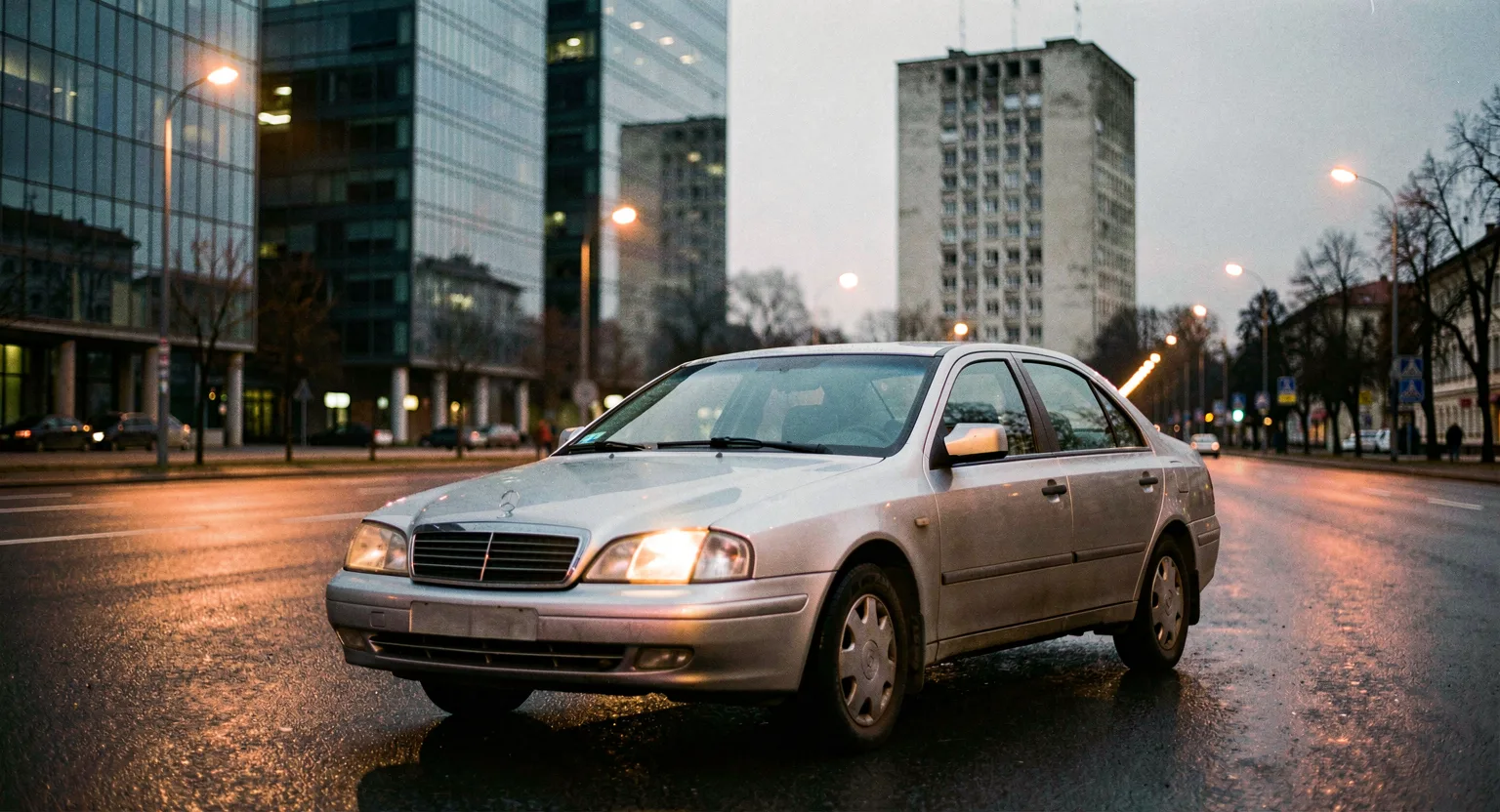
Renting a car to drive for Bolt or Uber in Warsaw usually costs 600–900 PLN per week for an economy hybrid or LPG car and 900–1500 PLN for Comfort class, plus a deposit of 500–5000 PLN. The rate is not the price, though: the real cost is set by the mileage limit, who pays for servicing and tyres, the insurance excess, and whether the fleet also takes a percentage of your turnover.
What it actually costs
Warsaw is Poland's largest taxi market: roughly 27,000 licences issued, a number that doubled between 2019 and 2021. Demand for cars here is higher than in any other Polish city, and the rates reflect it.
| Class | Rate / week | Deposit | Typical mileage cap |
|---|---|---|---|
| Economy (hybrid, LPG) | 600–800 PLN | 500–1500 PLN | 2500–4000 km / week |
| Standard | 800–1100 PLN | 1000–2500 PLN | 3000–4000 km / week |
| Comfort / XL | 1100–1500 PLN | 2000–5000 PLN | unlimited or 4000 km |
Daily rentals in Warsaw run 45–150 PLN a day: a Prius around 50 PLN, an LPG Corolla around 99 PLN, a Tesla 150 PLN. Daily rental is almost always more expensive per month, but it is the only format that does not commit you weeks ahead.

Why the spread is so wide
Because fleets make their money in different ways, and comparing a single number is meaningless.
One charges 900 PLN a week and nothing more. A second quotes 650 PLN but withholds 8–10 % of turnover — on 5000 PLN of weekly earnings that is another 400–500 PLN. A third offers 700 PLN with a 2500 km cap, and you drive 3200 km and pay the excess-mileage charge.
So the only honest comparison is not the rate but the total of every payment over a month at your real mileage.
What the rate covers, and what it never does
Almost always included:
- the car itself;
- third-party insurance and usually comprehensive cover;
- the periodic technical inspection;
- scheduled servicing and seasonal tyre changes.
Never included:
- fuel — at 300 km a day, 400–700 PLN a week depending on the car;
- washing — the apps require it, 30–60 PLN a week;
- your own contributions — social insurance and tax if you are self-employed;
- the insurance excess on an at-fault accident — a fixed sum in the contract that you pay even with full cover.
Four questions to ask before signing
The order is deliberate: most common source of disputes first.
- What is the excess on a damage claim? Not "is there comprehensive cover", but the figure in złoty.
- Who pays for servicing, tyres and insurance? If not the fleet, add it to your weekly cost.
- What is the mileage cap and what does exceeding it cost? At 3000 km a week, a 2500 km cap means a surcharge every week.
- May I also work for another fleet? If not, you are tied to one company and its settlement terms.
Licences and paperwork: the binding constraint in 2026
Since 17 June 2024, a ride-hailing driver in Poland must hold a Polish driving licence, and a foreign national must document at least 185 days of residence. Before that, Ukrainian or Georgian licences were enough, and a substantial share of the market rested on that.
The impact was visible: Uber forecast losing 15–30 % of its drivers, and the industry body TOR around 10 % nationally and up to 30 % in Warsaw. For those who stayed, that meant less competition for rides. For anyone arriving now, it means starting with the licence exchange rather than with the car search.

How much you need to drive for the rental to pay off
Full-time work in Warsaw earns a driver 6,000–9,000 PLN a month, with the strongest drivers reaching 10,000–13,000 PLN gross in peak months.
On an economy car at 750 PLN a week:
| Item | Per week |
|---|---|
| Rental | 750 PLN |
| Fuel (≈1800 km) | 550 PLN |
| Washing | 40 PLN |
| Total costs | 1340 PLN |
At an average fare and typical utilisation, that is roughly 45–55 rides a week just to break even. Everything above that is your income. Hence a simple rule: unless you are prepared to drive at least five days a week, renting for ride-hailing does not work financially, and a daily rental is the better format.
Where to look for cars
Most of the Warsaw market still lives in Telegram groups and on OLX. It is faster there, but there is no fleet history and no written terms: the rate is negotiated in chat, and the insurance excess surfaces after the accident.
In the ViroCars catalogue the same cars appear as listings where the weekly and monthly rate, deposit, mileage cap, excess and permission to work for another fleet are fields rather than verbal assurances. Comparing several fleets then takes minutes instead of an evening of messaging.
Sources: abupartner.pl (Warsaw rates) · olx.pl (daily prices, August 2026) · mbpartners.pl (earnings) · notesfrompoland.com (Polish licence requirement) · money.pl (Warsaw licence count)
Frequently asked
An economy hybrid or LPG car is usually 600–900 PLN a week, Comfort class 900–1500 PLN. The spread is wide because some fleets charge a higher rent and nothing else, while others quote a low rate and add a percentage of turnover.
Usually 500–5000 PLN depending on the class of car. Some fleets let you pay it in instalments out of your first weeks of work — a normal practice, but it must be written into the contract rather than promised verbally.
No. Since 17 June 2024 a ride-hailing driver in Poland must hold a Polish driving licence, and a foreign national must also document at least 185 days of residence. You may be able to sign a rental, but you will not pass registration with Bolt or Uber.
Technically yes, and most drivers do — it is the main way to avoid idle time. The limit is the fleet agreement: some firms require you to settle exclusively through them. A ViroCars listing states this as an explicit field.
For full-time work, almost always monthly: a weekly rate converted to a month runs 10–20 % higher. Weekly makes sense at the start, while you are still unsure whether you will stay in the job.