
Cars
Which car to choose for Uber and Bolt — a 2026 cost comparison
25.08.2026 · 9 min read
In ride-hailing, urban fuel consumption decides the outcome, not the rental rate. At a typical 1,800 km a week, a hybrid and an LPG-converted car cost about the same in fuel and roughly 300–350 PLN a week less than a comparable petrol car — more than the usual gap in rent. Which is why the more expensive hybrid is almost always the cheaper car for this job.
Start from the right number
The most common mistake when choosing a car for ride-hailing is comparing weekly rates. It matters, but it is not the largest cost you control.
At a typical 1,800 km a week:
| Drivetrain | Urban consumption | Fuel cost / week |
|---|---|---|
| Petrol | ~8 l / 100 km | ~900 PLN |
| Hybrid | ~5 l / 100 km | ~580 PLN |
| LPG | ~10.5 l / 100 km of gas | ~570 PLN |
The gap between petrol and hybrid is around 330 PLN a week, over 1,400 PLN a month. The typical difference in rent between those cars is considerably smaller.
Hence a conclusion that looks counter-intuitive and is simply arithmetic: the more expensive hybrid is usually the cheaper car in this job.
Hybrid versus LPG
On fuel alone they come out almost identical. The differences are practical, not financial:
| Hybrid | LPG | |
|---|---|---|
| Fuel cost | very low in the city | very low |
| Refuelling | everywhere | gas stations only |
| Boot | full | the tank takes part of it |
| Comfort | quieter, smoother | an ordinary petrol car |
| Servicing | dearer but less frequent | cheaper, plus system inspections |
The hybrid wins in a very dense city where the electric motor runs most of the time. LPG wins where routes are longer and the consumption gap narrows.
If both are available in your city, choose on boot space and comfort — the fuel difference cancels out anyway.
What the apps require
Bolt's and Uber's requirements are very close and cover the same set: vehicle age, number of doors, condition and cleanliness. Differences begin only at service tiers above the basic one, where each platform sets its own thresholds.
In practice a car that qualifies for one app almost always qualifies for the other — and that is the precondition for working both at once, which is the simplest way to cut idle time.
→ Bolt or Uber — which to drive for
Boot space: the line nobody thinks about
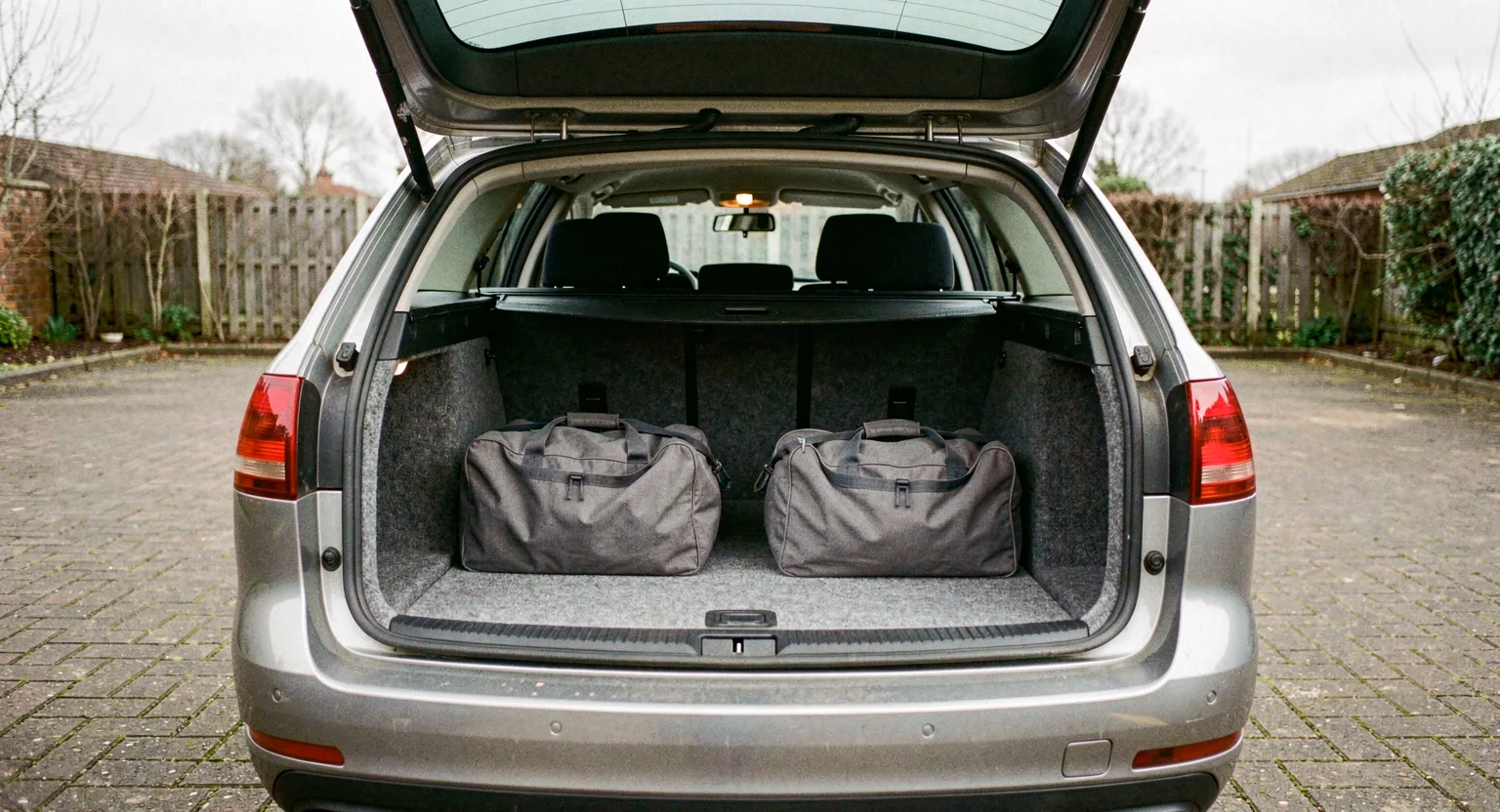
The boot does not affect the number of city rides, but it decides airport runs, and those are long and well paid. Two large suitcases plus hand luggage is the practical minimum.
An LPG car loses part of that space to the tank — a real argument against LPG in a city with heavy airport traffic, and a stronger one than any difference in consumption.
Automatic, not manual
City work means several hundred stops a day. The difference in fatigue after ten hours is not comparable, and the old argument about automatics using more fuel has essentially disappeared in modern cars.
This is one of the few decisions with no trade-off to weigh.
Electric: when it makes sense
The "fuel" cost is the lowest available. The problem is time.
An hour at a charger is an hour when the rent runs and you do not earn. At full-time hours and around 250 km a day, that means genuinely planning a mid-shift charge.
An EV works well with stable access to fast charging and a predictable schedule. It does not work if you drive irregularly and take rides wherever you happen to be.
When to pay up for Comfort class
A simple test: over the last fortnight, did you regularly get airport and business trips?
- Yes → the higher class can pay for itself, because the average fare is materially higher.
- No → the higher rental rate will simply drain away each week.
Comfort is a decision made on data from your city and your hours, not on the car looking better.
Three points to take away
- Count urban fuel consumption, not the weekly rate — it is the bigger line.
- Hybrid and LPG come out level; choose on boot space, comfort and availability.
- Automatic always; Comfort only on the strength of the fares you actually get.
In the ViroCars catalogue the drivetrain, transmission, weekly and monthly rate, deposit and mileage cap are listing fields, so all three decisions can be made before you contact the fleet.
→ The complete guide to renting for ride-hailing · What Bolt and Uber drivers earn
Sources: uber.com/pl (vehicle requirements) · olx.pl (available cars and rates, August 2026) · own calculations at August 2026 fuel prices and 1,800 km a week
Frequently asked
A compact hybrid or LPG car with an automatic gearbox and a boot that takes two large suitcases. That combination wins in the city because it minimises the largest variable cost — fuel.
On fuel they come out about the same. The hybrid is quieter and more comfortable; LPG is cheaper to service but needs gas stations and eats into the boot. The choice depends more on what is available in your city than on arithmetic.
Only if you genuinely serve airport and business trips. If you mostly work the city, the higher rental rate will not come back in your average fare.
The "fuel" cost is the lowest of all, but charging time matters: every hour at a charger is an hour you are not earning while the rent runs. An EV works with reliable fast charging and a predictable schedule.
Automatic. With several hundred stops a day the difference in fatigue is enormous, and in city driving an automatic no longer uses more fuel than a manual.