
Cars
Hybrid or LPG for ride-hailing: which actually costs less
25.08.2026 · 7 min read
On fuel alone, a hybrid and an LPG conversion come out almost identical — around 570–580 PLN a week at 1,800 km, against roughly 900 PLN on petrol. The differences are practical rather than financial: the hybrid wins in dense city traffic and keeps a full boot, while LPG is cheaper to service but the cylinder occupies the spare wheel well and needs gas stations.

The numbers first
The comparison only means anything at a specific mileage, so take a typical full-time week: 1,800 km.
| Drivetrain | Urban consumption | Fuel cost / week |
|---|---|---|
| Petrol | ~8 l / 100 km | ~900 PLN |
| Hybrid | ~5 l / 100 km | ~580 PLN |
| LPG | ~10.5 l / 100 km of gas | ~570 PLN |
The first conclusion matters most and surprises people most: hybrid and LPG cost practically the same on fuel. The entire difference between them lies elsewhere.
The second: both save roughly 330 PLN a week against petrol — over 1,400 PLN a month, more than the typical difference in rental rate between such cars.
→ Which car to choose for ride-hailing
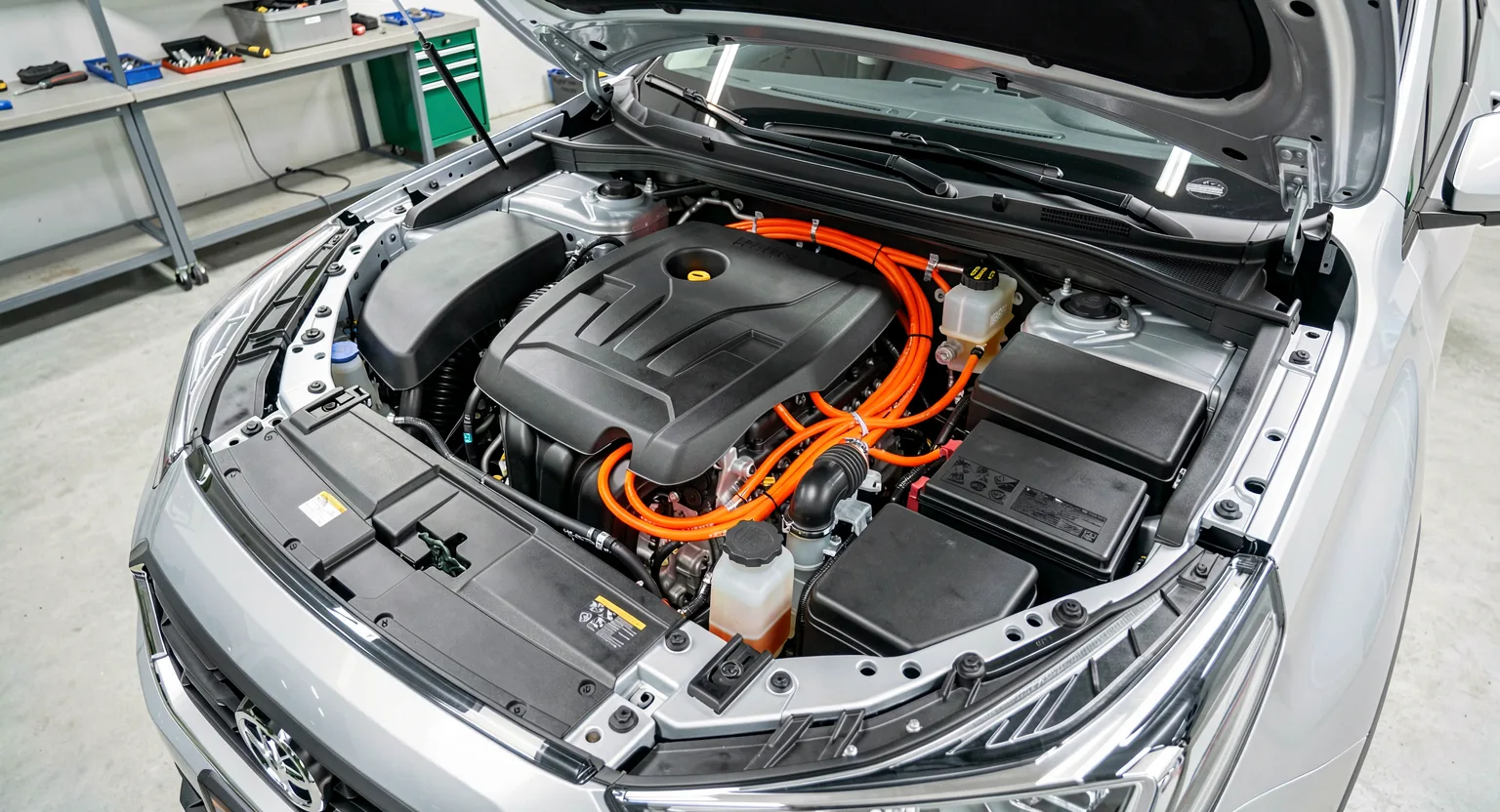
Where the difference actually is
| Hybrid | LPG | |
|---|---|---|
| Fuel cost | very low in the city | very low |
| Refuelling | any station | gas stations only |
| Boot | full | cylinder in the spare well |
| Comfort | quieter, smoother | like an ordinary petrol car |
| Servicing | dearer per visit, less often | cheaper, plus system inspections |
| Brakes | wear more slowly | normally |
Compact city versus inter-city routes
This is the one factor that genuinely tips the balance.
A hybrid saves most when the electric motor runs longest — at low speeds, with frequent stops and pull-aways. That is precisely the profile of a compact city.
On longer routes at steady speed the combustion engine runs almost continuously and the hybrid's advantage thins.
| Your city | What usually wins |
|---|---|
| Wrocław, Poznań, Łódź, Kraków | hybrid — short routes, dense traffic |
| Warsaw | hybrid, but by a smaller margin |
| Tricity, Silesia, Bydgoszcz | level — plenty of inter-city work |
→ Renting for ride-hailing in Wrocław · Renting for ride-hailing in the Tricity
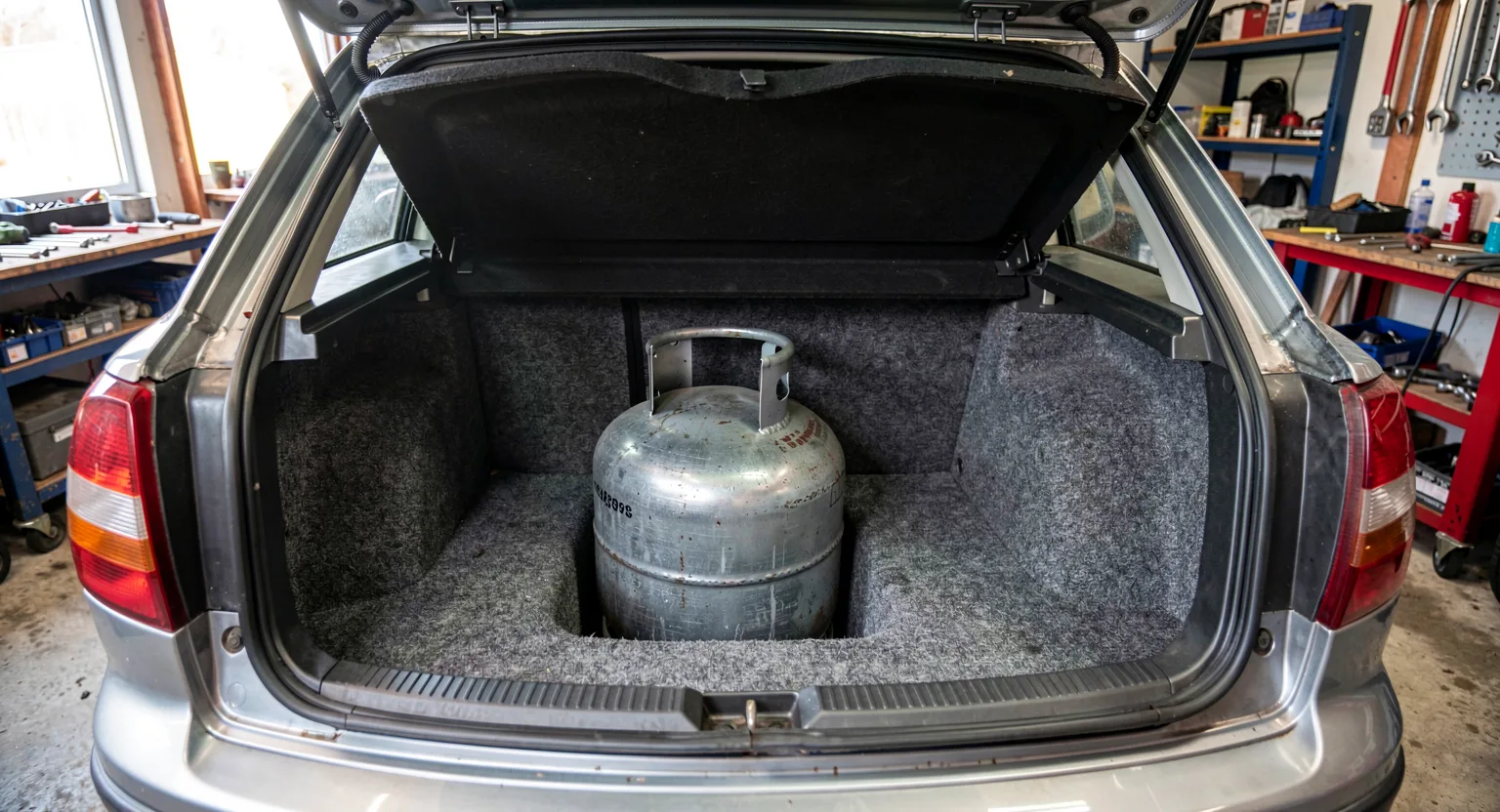
Boot space — the forgotten argument
The LPG cylinder usually occupies the spare wheel well. For city work that is irrelevant. For airport runs, where two large suitcases plus hand luggage matter, it can outweigh a ten-złoty weekly difference in fuel.
If airport traffic matters in your city — Kraków, the Tricity, Warsaw — this one detail can decide the whole comparison.
Refuelling and the rhythm of the day
A difference you only notice after a week of driving.
Hybrid: refuel anywhere, less often, and never plan for it.
LPG: refuel only where gas is sold, and more often, because the cylinder holds less than a petrol tank. In practice that is one extra stop per shift and a need to know where gas is available in your area.
Not a flaw — simply a different rhythm. But worth knowing before signing rather than on day three.
What about servicing
The myth: "hybrids are expensive to service".
The truth is more mixed. A single visit can cost more, but services come round less often and the brakes wear noticeably slower, because regeneration handles a large share of the braking. In a ride-hailing car that brakes several hundred times a day, that is a real line item.
LPG is cheaper on routine servicing, but adds periodic inspection and certification of the system.
On a rental this difference is not yours anyway — the fleet covers servicing. It only matters when you buy outright or take a rent-to-own deal.
→ Rent-to-own: where the catch is · What a rental includes and what it never does
The practical answer
Since fuel comes out level, choose on what genuinely differs:
- You work a compact city → hybrid.
- Plenty of inter-city fares → either; look at the rate and mileage cap instead.
- You are counting on airport traffic → hybrid, for the boot.
- You do not want to plan refuelling → hybrid.
- Only LPG is available and the rate is lower → take it; the fuel difference is nil anyway.
That last point is often the most practical: in many cities availability decides faster than arithmetic does.
In the ViroCars catalogue the drivetrain is a listing field alongside the rate, deposit and mileage cap, so the filter can be set before you contact the fleet.
Sources: own calculations at August 2026 fuel prices and 1,800 km a week · olx.pl (available cars and rates) · uber.com/pl (vehicle requirements)
Frequently asked
On fuel they come out practically level: around 570–580 PLN a week at 1,800 km. The difference only appears in servicing, boot space and refuelling convenience.
The hybrid. The electric motor runs most in dense traffic with frequent stops, so its advantage grows where routes are short — Wrocław, Poznań, Łódź.
The hybrid's advantage thins, because the combustion engine runs almost continuously. On inter-city work — the Tricity, Silesia, Bydgoszcz — LPG catches up and sometimes wins.
Yes, the cylinder usually occupies the spare wheel well. On airport runs, where two large suitcases matter, that can outweigh the difference in fuel cost.
A single visit can be, but services are less frequent and the brakes wear noticeably more slowly thanks to regeneration. Over a year the gap is smaller than one invoice suggests.